
Prescription Glasses
New Glasses Feel Wrong: What’s Normal

FSDAVCFEBFEVSDDVFSD
FSDAVCFEBFEVSDDVFSD
FSDAVCFEBFEVSDDVFSD
Why New Prescriptions Feel Different
If your new glasses feel wrong, you’re not alone. Even small changes in prescription, astigmatism correction, or lens design create a new optical “map” for your brain. Straight lines, depth perception, and motion may look slightly different at first. Progressive lenses add complexity because viewing zones shift as you move your head and eyes, making adaptation a learned process. Most discomfort improves as your visual system recalibrates with consistent wear.
Frame fit also matters—lens height, tilt, and how close lenses sit to your eyes affect clarity. Understanding what’s normal helps you stay consistent with wear, avoid worry, and know when an eyeglass fit adjustment or prescription check is needed.
If your new glasses feel wrong, you’re not alone. Even small changes in prescription, astigmatism correction, or lens design create a new optical “map” for your brain. Straight lines, depth perception, and motion may look slightly different at first. Progressive lenses add complexity because viewing zones shift as you move your head and eyes, making adaptation a learned process. Most discomfort improves as your visual system recalibrates with consistent wear.

Frame fit also matters—lens height, tilt, and how close lenses sit to your eyes affect clarity. Understanding what’s normal helps you stay consistent with wear, avoid worry, and know when an eyeglass fit adjustment or prescription check is needed.
Normal Adaptation Timelines by Lens Type
Single-vision distance or reading glasses usually settle in quickly. Many patients adjusting to new prescription glasses feel comfortable within 1–3 days, especially with minor prescription changes. A temporary “fishbowl” effect or mild glasses distortion after stronger prescription updates can occur but often fades with steady daily wear. Consistent use helps your visual system recalibrate, making straight lines, depth perception, and motion appear normal again.
Progressives, bifocals, and computer lenses require more learning. Expect a 1–2 week progressive lenses adaptation period. The first few days focus on head positioning, locating the reading zone, and scanning smoothly. Even switching between progressive brands may require short re-adaptation, even if the prescription remains similar. Taking time to practice these movements ensures comfortable vision and reduces strain or fatigue during daily tasks.
Astigmatism correction or prism may initially make floors look tilted or stairs feel unusual. Mild imbalance for a few days can be normal. However, true spinning dizziness, worsening nausea, or increasing headaches beyond several days are not typical and may signal the need for a recheck rather than continued adaptation. Prompt evaluation helps ensure your glasses fit properly and your prescription supports safe, comfortable vision.
Red Flags That Need a Recheck
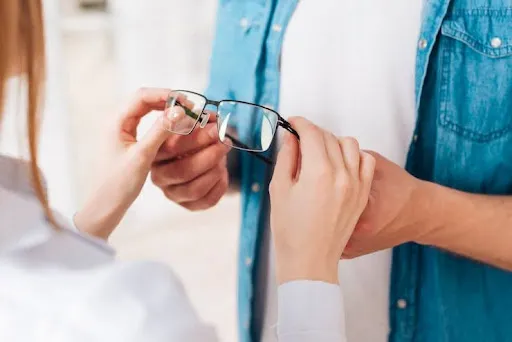
Contact your optometrist if you experience sharp eye pain, sudden double vision, or headaches that worsen instead of improve. Persistent blur in one eye, new flashes or floaters, or dramatic depth perception changes are not part of normal adaptation. Trouble walking downstairs or unsafe night driving also warrants an immediate check. An eye exam for new glasses Houston patients schedule promptly can prevent unnecessary discomfort and help ensure safe, clear vision.
From a glasses standpoint, red flags include clear vision only when tilting your head, one lens feeling noticeably stronger, or distortion at the center of the lens.
Frequent squinting, persistent halos, or holding reading material at unusual angles may indicate a measurement or alignment issue. These signs often point to prescription verification or eyeglass fit adjustment needs, allowing your eyes to adapt comfortably and safely.
For the first week, wear your new glasses consistently in safe, familiar settings. Switching back and forth between old and new lenses slows adaptation because your brain keeps resetting to the previous visual map. Clean lenses daily and ensure the frame sits level—crooked alignment can mimic glasses distortion after new prescription updates. Short breaks are fine, but return to the new pair promptly to support steady recalibration. Consistent wear helps your visual system adjust more quickly, reducing temporary blur, fishbowl effects, or mild distortion.
Test real-life tasks such as reading, computer work, grocery shopping, and night driving. With progressives, point your nose toward what you want to see and move your head—not just your eyes—until the image sharpens. Take note of when symptoms occur and what feels off. Clear details help Kleinwood Vision determine whether you need more time, a lens adjustment, or a prescription check, ensuring safe, comfortable, and accurate vision for daily activities.
Common Fit Problems That Mimic Prescription Issues
Many complaints about new glasses “feeling wrong” are actually fit-related. If a frame rides too low, you may look through the wrong zone of a progressive lens, causing blur or “swim.” Excessive wrap or tilt can alter effective power, especially in stronger prescriptions. A simple mirror check—are the lenses centered on your pupils and sitting level?—can reveal obvious misalignment. Small adjustments early prevent prolonged discomfort and help your visual system adapt more quickly.
Nose pad pressure, slipping, or temple tightness can shift lens position throughout the day. Measurement issues like incorrect pupillary distance or lens height can mimic prescription errors. A quick in-office eyeglass fit adjustment—leveling the frame or adjusting vertex distance—often resolves symptoms immediately. If not, the lenses can be verified against the written prescription to ensure clarity, comfort, and proper adaptation.
Progressives and Bifocals Adjustment Tips
Keep your chin level and use the upper portion for distance viewing. Drop your eyes slightly for near tasks instead of tilting your entire head. Move your head smoothly when scanning store shelves rather than darting your eyes side to side. For stairs or curbs, slow down during the first few days and use the distance zone. Looking through the reading area while walking can create imbalance, so focus on the proper area for safety.
Adequate lighting at home improves confidence during progressive lenses adaptation. At the computer, position your monitor so your eyes naturally align with the clearest corridor. Small posture and setup changes often make a dramatic difference.
Keep your chin level and use the upper portion for distance viewing. Drop your eyes slightly for near tasks instead of tilting your entire head. Move your head smoothly when scanning store shelves rather than darting your eyes side to side. For stairs or curbs, slow down during the first few days and use the distance zone. Looking through the reading area while walking can create imbalance, so focus on the proper area for safety.
Adequate lighting at home improves confidence during progressive lenses adaptation. At the computer, position your monitor so your eyes naturally align with the clearest corridor. Small posture and setup changes often make a dramatic difference.

If you spend long hours at mid-range, ask whether occupational lenses would improve comfort and reduce strain.
How Clinics Troubleshoot ‘Wrong’ Glasses
At a follow-up, the first step is confirming accuracy. The clinic verifies that lenses match the written prescription, that pupillary distance and segment heights were measured correctly, and that the frame sits level. Opticians may mark lens reference points while you wear the glasses to ensure your eyes align with the intended optical zones. This careful alignment ensures that each lens performs as designed and that visual clarity is optimized from the first moment.
Fit variables—tilt, wrap, and vertex distance—are also checked because they affect effective power. Even minor deviations can cause blur or a “swim” effect. Lens material or thickness may influence distortion, and sometimes choosing a different base curve provides a more natural feel. Proper adjustments at this stage can dramatically improve comfort and reduce strain, particularly for first-time progressive lens wearers or high-prescription glasses.
If the fit is correct but symptoms persist, your optometrist may repeat refraction or compare your old and new lenses. Small astigmatism axis shifts or near add changes can significantly impact comfort. For progressive lenses, switching designs or modifying corridor length may improve adaptation, making daily tasks like reading, computer work, and distance viewing more comfortable and less fatiguing.
Underlying eye health is also considered. Conditions such as dry eye, focusing fatigue, or binocular stress can make adjusting to new prescription glasses harder. Treating these factors alongside lens adjustments helps ensure the final result feels clear and stable. You should leave with a clear plan—whether adjustment, remake, or recheck—so progress is measurable and your vision remains comfortable and reliable.
What to Bring to the Follow-Up
Bring both your new and previous glasses so the clinic can compare prescriptions, designs, and alignment. Write down the top situations where vision feels wrong—stairs, grocery aisles, night driving, or computer work. A quick photo of how the glasses sit on your face can also help identify alignment concerns and make explanations more precise.
Note timing: did symptoms begin immediately or after hours of wear? Does closing one eye help? Does tilting the frame change clarity? Include headaches, nausea, glare, and your typical screen hours. These details help the optometrist pinpoint whether issues relate to fit, prescription, or adaptation.

Bring both your new and previous glasses so the clinic can compare prescriptions, designs, and alignment. Write down the top situations where vision feels wrong—stairs, grocery aisles, night driving, or computer work. A quick photo of how the glasses sit on your face can also help identify alignment concerns and make explanations more precise.
Note timing: did symptoms begin immediately or after hours of wear? Does closing one eye help? Does tilting the frame change clarity? Include headaches, nausea, glare, and your typical screen hours. These details help the optometrist pinpoint whether issues relate to fit, prescription, or adaptation.
If you wear contacts part-time, bring that prescription and any eye drops you use. Mention recent medication changes or dry eye symptoms. Clear examples speed troubleshooting and improve accuracy during your visit, ensuring your glasses provide the best possible vision and comfort.
Simple Two-Week Adapt Plan
Days 1–3: Wear your new glasses most of the day in predictable environments, avoiding switching back unless necessary for safety. Keep lenses clean, ensure the frame sits straight, and take regular distance breaks during screen time. With progressives, point your nose at your target and move your head to scan naturally, allowing your eyes to adapt smoothly to the new lenses. These early days are crucial for building comfort and minimizing strain during daily activities.
Days 4–14: Test daily activities—driving, stairs, shopping, and computer work—and track what improves or persists. If symptoms steadily decrease, adaptation is progressing normally. If your new glasses feel wrong without improvement, schedule an eye exam for new glasses Houston patients trust at Kleinwood Vision. Contact us promptly so the solution is specific, timely, and confidence-restoring, ensuring clear, comfortable vision throughout the adaptation process.
Contact Info
Hours of Operation
Mon - Fri | 9:00 AM - 5:00 PM
Sat - Sun | Closed
Holiday Hours: We are closed for the following holidays: New Years Day, Memorial Day, Independence Day, Labor Day, Thanksgiving Day, Christmas Day
The information provided on this website is for general informational purposes only and does not constitute professional medical advice, diagnosis, or treatment. Always seek the guidance of a licensed eye care professional or qualified health provider with any questions you may have regarding a medical condition or vision concern. Results from eye care services may vary by individual.
© 2026 Kleinwood Vision. All rights Reserved.