
Specialty Contact Lenses
How Corneal Topography Shapes Better Specialty Contact Lens

FSDAVCFEBFEVSDDVFSD

FSDAVCFEBFEVSDDVFSD

FSDAVCFEBFEVSDDVFSD
Why Corneal Shape Matters for Lens Fit
Specialty contact lenses are not fitted by prescription alone. The shape of the front surface of the eye plays a major role in how a lens sits, moves, centers, and provides clear vision. This is especially important for patients with keratoconus, corneal scarring, post-surgical corneas, high astigmatism, or other irregular corneal shapes. A successful specialty contact lens fitting begins with understanding these unique corneal characteristics.
Corneal topography provides details that a standard prescription cannot. A corneal topography scan maps the cornea’s curves, identifying steep areas, flat areas, asymmetry, and irregularity. This information helps achieve a customized fit and better results for patients seeking specialty contacts Houston solutions.
Specialty contact lenses are not fitted by prescription alone. The shape of the front surface of the eye plays a major role in how a lens sits, moves, centers, and provides clear vision. This is especially important for patients with keratoconus, corneal scarring, post-surgical corneas, high astigmatism, or other irregular corneal shapes. A successful specialty contact lens fitting begins with understanding these unique corneal characteristics.
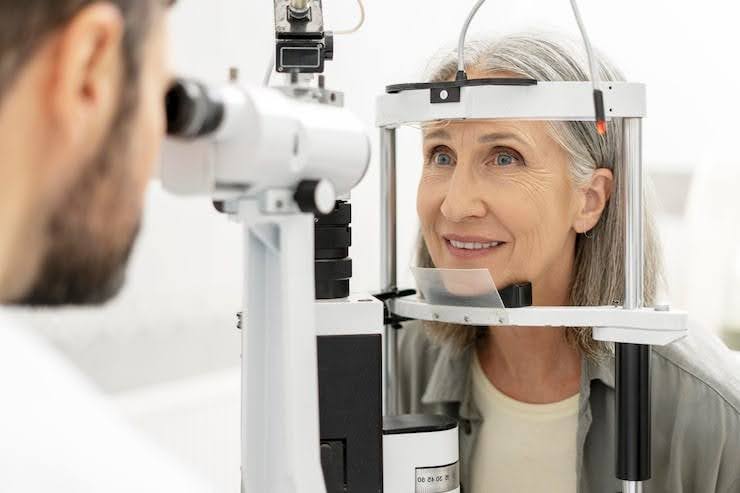
Corneal topography provides details that a standard prescription cannot. A corneal topography scan maps the cornea’s curves, identifying steep areas, flat areas, asymmetry, and irregularity. This information helps achieve a customized fit and better results for patients seeking specialty contacts Houston solutions.
What Corneal Topography Shows the Doctor
Corneal topography creates a highly detailed map of the cornea’s surface. Rather than only measuring whether a patient is nearsighted, farsighted, or has astigmatism, the scan shows how the cornea is shaped across multiple zones. This is important because two patients with similar prescriptions can have very different corneal structures and contact lens requirements. Understanding these differences allows the doctor to begin planning a more personalized fitting approach.
The scan can identify whether the cornea is evenly curved or irregular, whether certain areas are significantly steeper than others, and whether the pattern suggests conditions such as keratoconus or other corneal disorders. It may also reveal changes caused by surgery, injury, or years of contact lens wear. These findings help doctors determine which specialty lens design is most appropriate for the patient's unique eye shape and vision needs.
For lens fitting, topography reduces much of the guesswork. The information helps estimate lens clearance, alignment, and landing zones before trial lenses are applied. While additional evaluations remain necessary, the corneal topography specialty contact lenses process provides a more efficient, accurate starting point and often improves overall fitting success, comfort, and visual performance.
How Topography Helps Choose Lens Type
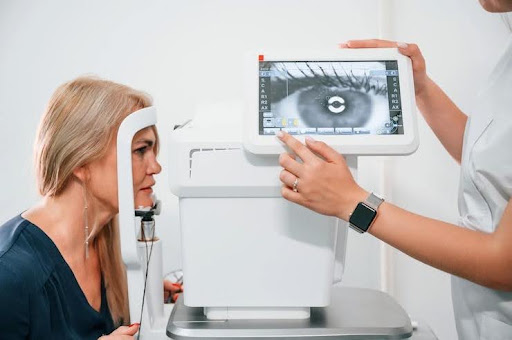
Different corneal shapes often require different specialty lens designs. A mild irregularity may respond well to one lens style, while a more advanced condition may require a scleral lens fitting that completely vaults over the cornea and rests on the sclera. Corneal topography helps identify which approach is likely to provide the best balance of comfort, stability, and vision while reducing unnecessary trial-and-error during the fitting process.
The scan itself does not determine the final lens choice. The doctor also considers eye health, tear quality, visual goals, previous lens experience, and handling ability.
The best results come from combining precise measurements with real-world patient needs and expectations. By evaluating all of these factors together, the doctor can recommend a specialty lens that offers long-term comfort, clear vision, and a fit tailored to the unique shape of each patient's eyes.
Patients are often surprised that a specialty contact lens fitting requires more time than a routine contact lens appointment. The reason is that irregular corneas demand a more individualized approach. Standard soft lenses may not adequately correct distorted vision because they conform to the uneven corneal surface. Every eye has unique characteristics, so additional measurements and evaluations are necessary to achieve the best possible fit and visual outcome.
Corneal topography helps the doctor understand the shape challenges before placing a lens on the eye. This can reduce unnecessary trial-and-error fitting and provide a more accurate starting point. However, lens movement, centration, clearance, comfort, and visual quality must still be evaluated carefully throughout the fitting process. Patients with questions about testing, specialty lens designs, or treatment options are encouraged to Contact us for guidance and personalized recommendations that support comfortable vision and long-term eye health.
Why Repeat Measurements May Be Needed
Corneal topography may need to be repeated because corneal shape can change over time. Patients with keratoconus, post-surgical corneas, progressive conditions, or tear film instability may require updated scans to maintain an accurate lens design. The initial measurement is valuable, but it represents only one point in time and may not reflect future changes that affect lens performance.
Repeat scans can also help explain changes in comfort or vision. If a lens that once performed well no longer feels comfortable, updated measurements may reveal subtle corneal changes. This information helps determine whether the lens requires adjustment or whether another issue needs attention. Regular monitoring supports a more precise specialty contact lens fitting, helping patients maintain clear vision, better comfort, and long-term success with their specialty lenses as their eye health changes over time.
Topography and Scleral Lens Fitting
Scleral lenses rely heavily on detailed shape measurements because they vault over the cornea rather than resting directly on it. The amount of clearance between the lens and the cornea is a critical part of the fitting process. Proper clearance supports comfort, protects the corneal surface, and helps achieve stable vision throughout daily wear.
Too little clearance may increase the risk of irritation or pressure on sensitive tissues. Too much clearance may reduce comfort, affect handling, or influence vision quality. Achieving the right balance requires careful planning, accurate measurements, and clinical evaluation.
Scleral lenses rely heavily on detailed shape measurements because they vault over the cornea rather than resting directly on it. The amount of clearance between the lens and the cornea is a critical part of the fitting process. Proper clearance supports comfort, protects the corneal surface, and helps achieve stable vision throughout daily wear.
Too little clearance may increase the risk of irritation or pressure on sensitive tissues. Too much clearance may reduce comfort, affect handling, or influence vision quality. Achieving the right balance requires careful planning, accurate measurements, and clinical evaluation.
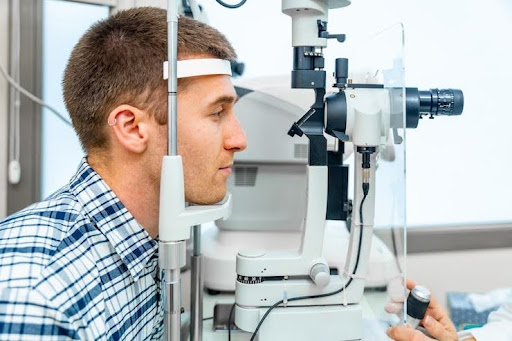
Corneal topography provides valuable information about corneal shape, while follow-up assessments confirm how the scleral lens settles during normal wear. Together, these steps help create a safer, more stable fit with lasting comfort and visual performance.
Why Topography Improves Fitting Accuracy
Corneal topography is particularly valuable for patients who have struggled with traditional contact lenses. Some patients continue to experience blurry vision despite wearing glasses, while others deal with glare, halos, ghosting, or fluctuating vision caused by irregular corneal surfaces. These visual challenges can make daily activities difficult and may indicate that standard correction options are not providing the clarity or comfort needed. A detailed understanding of the cornea’s shape helps doctors determine the most appropriate approach.
The topography scan provides a visual map that helps explain these problems. Instead of simply describing an eye as difficult to fit, the doctor can identify specific areas where the cornea differs from normal shape patterns. This information helps patients better understand why specialty lenses may offer advantages over standard options and how a customized approach can improve vision.
The scan also helps create a more efficient fitting pathway. By understanding the corneal profile before selecting a lens, doctors can choose more appropriate starting designs and make better-informed adjustments throughout the process. This often reduces unnecessary trial and error while improving the likelihood of achieving a successful specialty contact lens fitting.
Patients should remember that specialty lens fitting remains a process rather than a single event. The first scan provides an important foundation, but feedback gathered during actual wear is equally valuable. Comfort, clarity, dryness, fogging, redness, and wearing time all contribute to the final lens design. When corneal topography findings are combined with patient experience, the result is often a safer, more comfortable, and more effective lens solution designed around each patient’s unique eye needs.
What Patients Should Expect During the Scan
A corneal topography scan is typically quick, comfortable, and noninvasive. During the test, patients simply look at a target while the instrument captures detailed information about the shape and curvature of the cornea. This advanced measurement helps provide a clearer understanding of the eye’s unique structure.
The procedure usually does not require touching the eye and is painless for most patients. The most important part is maintaining steady focus so the instrument can gather accurate measurements. The test is often performed during comprehensive eye exams and specialty lens evaluations.
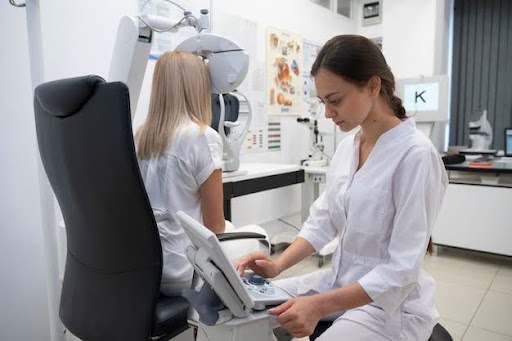
A corneal topography scan is typically quick, comfortable, and noninvasive. During the test, patients simply look at a target while the instrument captures detailed information about the shape and curvature of the cornea. This advanced measurement helps provide a clearer understanding of the eye’s unique structure.
The procedure usually does not require touching the eye and is painless for most patients. The most important part is maintaining steady focus so the instrument can gather accurate measurements. The test is often performed during comprehensive eye exams and specialty lens evaluations.
After the scan is complete, the doctor reviews the map and explains how the corneal shape affects lens selection, visual expectations, and the overall treatment plan. This discussion helps patients understand why specific lens options are recommended and how they support better vision outcomes while improving comfort and confidence through personalized care for each patient’s needs.
Your Next Step for Better Vision
If glasses or standard contact lenses are no longer providing clear, stable, or comfortable vision, corneal topography may be an important step toward finding a better solution. The scan reveals details about corneal shape that cannot be identified through a prescription alone. This information is especially valuable for patients with keratoconus, post-surgical corneas, or other irregular cornea contact lenses needs requiring customized care.
At Kleinwood Vision, advanced corneal topography and specialty contact lens fitting techniques help create personalized solutions based on each patient's unique eye shape. A better understanding of the cornea often leads to a more accurate starting point, fewer fitting challenges, and improved long-term visual comfort. Patients can receive detailed evaluations that support clearer vision and better lens performance through advanced measurements and individualized recommendations. These approaches help improve confidence and overall satisfaction with specialty lens care solutions.
Contact Info
Hours of Operation
Mon - Fri | 9:00 AM - 5:00 PM
Sat - Sun | Closed
Holiday Hours: We are closed for the following holidays: New Years Day, Memorial Day, Independence Day, Labor Day, Thanksgiving Day, Christmas Day
The information provided on this website is for general informational purposes only and does not constitute professional medical advice, diagnosis, or treatment. Always seek the guidance of a licensed eye care professional or qualified health provider with any questions you may have regarding a medical condition or vision concern. Results from eye care services may vary by individual.
© 2026 Kleinwood Vision. All rights Reserved.