
Myopia Management
Cycloplegic Refraction for Myopia Guide

FSDAVCFEBFEVSDDVFSD
FSDAVCFEBFEVSDDVFSD

FSDAVCFEBFEVSDDVFSD
Why Regular Refraction Can Miss the Truth
During a standard eye exam, some patients—especially children and teens—can still focus or “help” during prescription testing. This extra effort may make them appear more nearsighted or hide blur caused by an overactive focusing system rather than true myopia. When treatment decisions depend on precise measurements, this difference can impact diagnosis and long-term care planning more than most families expect.
Cycloplegic refraction for myopia solves this by using dilation drops for eye exam procedures to relax the focusing muscle. Once accommodation stops, doctors obtain a more accurate myopia measurement, ensuring any eye exam before myopia treatment reflects the eye’s true refractive state.
During a standard eye exam, some patients—especially children and teens—can still focus or “help” during prescription testing. This extra effort may make them appear more nearsighted or hide blur caused by an overactive focusing system rather than true myopia. When treatment decisions depend on precise measurements, this difference can impact diagnosis and long-term care planning more than most families expect.

Cycloplegic refraction for myopia solves this by using dilation drops for eye exam procedures to relax the focusing muscle. Once accommodation stops, doctors obtain a more accurate myopia measurement, ensuring any eye exam before myopia treatment reflects the eye’s true refractive state.
What Cycloplegic Drops Actually Do
Cycloplegic drops temporarily reduce the eye’s ability to focus at near distances. They often also enlarge the pupils, which is why many families refer to them as dilation drops for eye exam procedures. However, their most important role is relaxing accommodation so the doctor can measure vision without interference from the eye’s natural focusing effort, ensuring a more precise and stable assessment during testing.
Once the drops take effect, the doctor repeats key testing steps to evaluate what the prescription looks like without compensation. This can help determine whether increased blur is due to true myopia, pseudomyopia, or a combination of both. It can also reveal whether previous prescriptions may have been stronger than necessary if accommodation was not fully controlled during earlier eye exams. This step is especially useful in children and teens, where focusing ability can easily mask the true refractive error.
Cycloplegic refraction is not used to complicate the visit—it is used to improve accuracy. A myopia management evaluation depends on reliable baseline data before any treatment begins. Whether families are considering glasses, contact lenses, or broader treatment strategies, accurate starting numbers help avoid overcorrection, confusion, and repeated adjustments later, leading to more effective long-term vision care.
When It Matters Most for Myopia Care
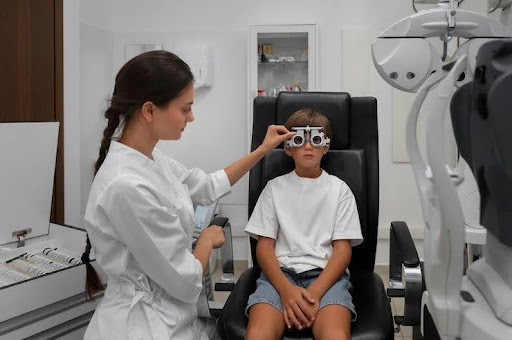
Cycloplegic refraction becomes especially important when a child’s prescription seems to change quickly, when distance blur worsens after extended near work, or when symptoms do not match the current glasses strength. It is also a key step during a myopia management evaluation, where the goal is to understand how much true refractive error is present and guide accurate clinical decisions for long-term vision care.
In younger patients, this step is critical because their focusing systems are very strong. Without drops, a child may unintentionally “pull” extra minus power during testing, which can distort results.
That can affect decisions about whether simple glasses are enough or whether further monitoring or treatment is needed. For any eye exam before myopia treatment, reliable measurements help ensure the plan starts on the right foundation and supports more accurate, effective management.
Families often feel more comfortable when they know what to expect. After the drops are placed, there is usually a short waiting period while the focusing system relaxes. During this time, near vision may become blurry, and light sensitivity can increase temporarily because the pupils are larger. The eye is simply adjusting, and these effects are expected parts of the process rather than a cause for concern during the examination.
Some children are not bothered at all, while others prefer wearing sunglasses and reducing screen time for a few hours afterward. These effects are temporary and typically wear off later the same day as the drops gradually wear off. Understanding this in advance makes the visit easier and helps reduce anxiety around pediatric eye dilation Houston families may not have experienced before, allowing the eye exam to feel smoother, more predictable, and less stressful overall.
What Results Can Change After Dilation
Sometimes the prescription changes only slightly after cycloplegia, confirming that the original measurement was already close to accurate. Other times, the difference is more noticeable, especially in patients with strong focusing habits or suspected pseudomyopia. In those cases, what initially appeared to be a higher level of nearsightedness may reduce once accommodation is removed, giving a clearer picture of true refractive error and overall visual status during testing.
This information affects more than just the glasses prescription. It influences how progression risk is explained, how frequently follow-ups are scheduled, and whether formal treatment is recommended. A comprehensive eye exam Houston providers perform with cycloplegia improves confidence that future changes reflect real progression rather than inconsistent testing, supporting more reliable myopia management decisions and long-term eye health planning for patients of all ages.
Why Parents Should Not Skip It
Parents sometimes assume dilation-style drops are optional, especially if their child can read part of the chart or has passed a screening. However, screenings are not designed for treatment decisions and may miss subtle refractive changes important for long-term vision care.
If the goal is accurate myopia measurement, the doctor must see how the eyes behave when the focusing system is fully relaxed. This matters when prescriptions change quickly or symptoms seem inconsistent, since active focusing can hide true nearsightedness or distort results.
Parents sometimes assume dilation-style drops are optional, especially if their child can read part of the chart or has passed a screening. However, screenings are not designed for treatment decisions and may miss subtle refractive changes important for long-term vision care.
If the goal is accurate myopia measurement, the doctor must see how the eyes behave when the focusing system is fully relaxed. This matters when prescriptions change quickly or symptoms seem inconsistent, since active focusing can hide true nearsightedness or distort results.

Skipping cycloplegic refraction can create uncertainty. A short period of temporary blur is often worth the clarity it provides for diagnosis and long-term care planning, leading to more accurate prescriptions and better-informed decisions in myopia management over time.
How Accurate Measurements Improve Care
Families often feel more comfortable once they understand that cycloplegic refraction is not an add-on but a critical tool for clarity. Myopia management depends on reliable data, and young eyes can easily hide or exaggerate blur during routine testing. These drops remove that variable, allowing the doctor to measure the eye’s true refractive state without interference from natural focusing effort, leading to more accurate and consistent results during examination.
This level of accuracy helps prevent avoidable issues in vision care. Overcorrected prescriptions can increase eye strain, headaches, or discomfort, while underestimating true progression can delay needed care and monitoring. By stabilizing measurements, cycloplegic testing ensures that clinical decisions are based on real refractive error rather than temporary focusing fluctuations that may change from visit to visit or even during the same exam session.
Consistent, precise measurements also make it easier to track changes over time and determine whether a chosen treatment is working as expected. This continuity is especially important in children, where even small changes in prescription can signal meaningful shifts in progression that require timely adjustments in care strategies. It also supports clearer communication between families and eye care providers, reducing confusion about whether vision changes are real or testing-related.
Whether the outcome is updated glasses, continued monitoring, or a broader treatment plan, better data leads to better decisions. This is why pediatric eye exams that include cycloplegia are often recommended when accuracy matters most, helping clinicians establish a dependable baseline and build a stronger foundation for long-term eye health and effective myopia control strategies.
Questions to Ask About the Drops
Parents and patients should feel comfortable asking why cycloplegic refraction for myopia is recommended in their specific case. It is helpful to understand whether the concern is strong focusing effort, rapid changes in prescription, or the need for a clearer baseline before treatment begins so decisions are more accurate and personalized.
You can also ask how long the effects typically last and what to expect afterward. Knowing whether sunglasses are helpful or whether schoolwork should be adjusted for the day makes planning easier and reduces anxiety, especially for children undergoing their first dilation experience during an eye exam.

Parents and patients should feel comfortable asking why cycloplegic refraction for myopia is recommended in their specific case. It is helpful to understand whether the concern is strong focusing effort, rapid changes in prescription, or the need for a clearer baseline before treatment begins so decisions are more accurate and personalized.
You can also ask how long the effects typically last and what to expect afterward. Knowing whether sunglasses are helpful or whether schoolwork should be adjusted for the day makes planning easier and reduces anxiety, especially for children undergoing their first dilation experience during an eye exam.
Finally, ask how the results will affect the next step in care. Understanding how the drops support decision-making helps the process feel purposeful rather than routine, giving families confidence that each step in evaluation is contributing to better myopia management outcomes and long-term vision health.
Your Next Steps Before Your Visit
Before your appointment, bring current glasses, prior prescriptions, and a short summary of symptoms such as distance blur, headaches, or recent vision changes. If dilation drops for eye exam use are planned, ask ahead whether your child should bring sunglasses or prepare for temporary light sensitivity so the visit is more comfortable and predictable.
If your goal is a clear and reliable diagnosis, Kleinwood Vision provides guidance on whether cycloplegic refraction is appropriate and how it supports long-term care. A properly performed comprehensive eye exam Houston families trust can make a difference before starting treatment. Understanding your child’s needs, test process, and expected effects helps reduce anxiety and improves preparation for the appointment. If you have questions or want to schedule an evaluation, Contact us to take the next step with confidence. This ensures accurate results, better treatment planning, and improved long-term eye health for your child.
Contact Info
Hours of Operation
Mon - Fri | 9:00 AM - 5:00 PM
Sat - Sun | Closed
Holiday Hours: We are closed for the following holidays: New Years Day, Memorial Day, Independence Day, Labor Day, Thanksgiving Day, Christmas Day
The information provided on this website is for general informational purposes only and does not constitute professional medical advice, diagnosis, or treatment. Always seek the guidance of a licensed eye care professional or qualified health provider with any questions you may have regarding a medical condition or vision concern. Results from eye care services may vary by individual.
© 2026 Kleinwood Vision. All rights Reserved.